The Pacific Northwest’s Most Ambitious Through Hikes
A long trail day in the Cascades usually stops feeling predictable pretty early.
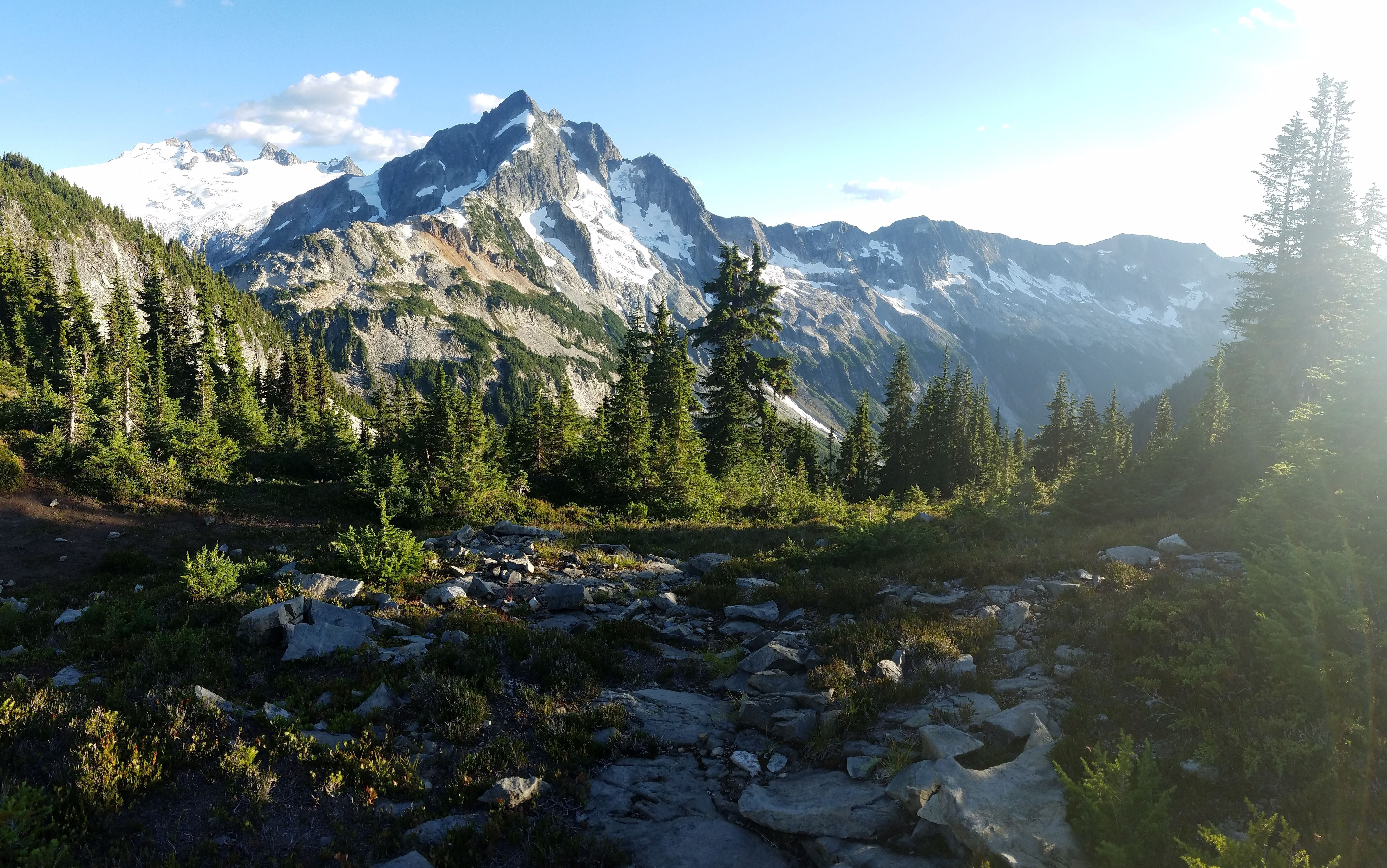
You can start in damp forest air where your shell never really comes off, climb for hours without seeing anything but switchbacks and wet brush, and then suddenly step out onto an exposed ridge where the wind feels like it’s coming from a different season entirely. By the time you drop back into tree cover again, everything is wet, dry, cold, and warm all at once.
That’s part of the draw.
The Pacific Northwest doesn’t really give you extended periods of sameness. Terrain changes quickly here. Not dramatically in a cinematic way, but constantly in small ways that add up. Forest floors turn to talus without much warning. Volcanic ridges hold wind differently than expected. Snowfields linger long after you think they should be gone.
Just when you think the day has settled into something consistent, the terrain changes again.
That difference matters more on longer routes.
The Pacific Crest Trail gets most of the attention, and for good reason, but the section through Oregon and Washington is where the character of the region really shows up. Rainier’s Wonderland Trail and the Enchantments in Washington compress similar dynamics into shorter, more intense windows. Same volatility, just condensed.
And once you’re moving for long enough, the pattern becomes obvious.
Nothing stays consistent for very long.

Why the Pacific Northwest Feels Different
In a lot of mountain ranges, you eventually find a pace and hold it for hours. The Cascades rarely let that happen.
Weather moves through faster than expected. Elevation gains stack quickly. You’ll be in thick forest one hour and fully exposed the next without much in between. Even in good summer stretches, there’s a tendency toward variability. Cold mornings that turn hot. Dry sections that suddenly aren’t. Snow crossings that feel out of place. By mid-afternoon, most people’s socks are wetter than they planned for, whether it rained or not.
It keeps you paying attention.
People eventually stop carrying “comfort systems” they never use and start building lighter, more responsive gear kits instead. Layers that dry fast matter more than layers that insulate heavily. Wind protection that disappears into a pack matters more than something you only use twice a trip.
Not because it’s minimalism for its own sake.
Because stopping to manage gear slows everything down in a place where movement already takes effort.
The routes themselves reflect that same unpredictability. Some routes wear you down slowly. Others feel hard almost immediately. A few manage to be all of it at once.

The Pacific Crest Trail
The PCT is often talked about like a single continuous experience, but the Pacific Northwest section doesn’t really behave that way.
The Northern Oregon section of the PCT moves through a mix of volcanic terrain, thick forest, and long exposed stretches around the Three Sisters and Mount Hood wilderness. The Washington section feels like a different trail entirely once you cross the border. Wetter, steeper, more uneven underfoot.
It’s less about any one section being difficult and more about how long the variability lasts.
You don’t get to reset often.
Days start to blur together after a while. Gear stays damp longer than you want it to. Weather windows matter more than expected. You end up managing small inefficiencies constantly just to stay moving.
That’s usually where gear systems start getting refined.
People stop carrying things they thought they needed early on. Layering systems get simplified. Anything that doesn’t dry quickly or regulate heat under effort tends to get replaced or left behind.
Not because it looks cleaner.
Because after enough days out there, small problems stop feeling small.

The Enchantments Traverse
The Enchantments don’t give you time to settle into anything.
It’s short compared to most long-distance routes, but it doesn’t really feel short while you’re on it.
The climb up Aasgard Pass is usually where the tone of the hike is set. Steep enough that pace stops being a meaningful concept and becomes more about steady progression. Loose rock, heat exposure, and constant effort compress everything into a slower pace whether you want it or not.
Once you’re above the pass, the landscape shifts quickly.
Granite basins, scattered alpine lakes, patches of snow that linger well into summer, and long exposed sections where wind moves through without obstruction. The weather doesn’t need much time to change things here.
There’s very little autopilot hiking on this trail.
Every section asks for attention in a different way. Footing, temperature, exposure, pace. It’s all changing slowly but surely as you move through the experience.
Because of that, gear ends up mattering in a very practical sense. Not more gear, just better-tuned systems. Things that move easily between high output climbs and exposed ridgelines without requiring constant adjustment.
Most people who move through it comfortably aren’t carrying more. They’re carrying less that does more.

The Wonderland Trail
The Wonderland Trail loops Mount Rainier in a way that feels straightforward on paper and less straightforward in practice.
Ninety-three miles around a single mountain sounds consistent until you’re actually on it. The terrain doesn’t behave like a loop. It behaves like a series of unrelated sections stitched together by elevation gain and loss.
You climb, descend, and climb again without much rhyme or reason between them.
Rainier itself drives most of that variability. One side of the mountain can feel calm while another is dealing with weather that doesn’t match the forecast you planned for at all. Fog in the morning. Sun in the afternoon. Cold rain by evening without much warning in between.
It creates a pacing problem more than anything else.
If you push too hard early, it usually shows up later in the loop when accumulated elevation starts to catch up. If you move too conservatively, you end up spending more time exposed to shifting weather cycles.
Most experienced hikers end up somewhere in between. Not perfectly planned, just responsive.

Big Objectives Don’t Reward Complexity
Across all of these routes, there’s a pattern that becomes clear over time.
More gear doesn’t solve the problem. In fact, it usually creates new ones.
Long approaches, wet environments, and constantly changing conditions tend to expose inefficiencies quickly. Heavy systems slow movement. Slow movement increases exposure. Exposure increases fatigue.
Eventually, most people move toward systems that reduce friction instead of adding coverage.
Breathable layers that hold up under sustained output. Lightweight shells that move in and out of a pack without thinking about it. Fabrics that dry overnight instead of staying damp into the next day.
Not because that’s the “right” approach but because it’s the one that makes long days feel less complicated than they need to be; and in the Pacific Northwest, complication is usually what wears people down first.
The terrain doesn’t stop being demanding.
You just learn how to move through it with fewer interruptions