A Brief History of Adventure in Jackson Hole
Jackson Hole didn’t earn its place in big mountain history by accident. It’s not just the terrain that stands out; it’s the mindset that developed around it. Steep lines, real consequence, and a community that pushed snow sports beyond the resort boundary long before it was mainstream.

Where the Culture Took Shape
Early ski culture in Jackson wasn’t polished. It was raw, local, and shaped by people who were more interested in exploring than fitting in. When Jackson Hole Mountain Resort opened in the 1960s, it immediately cut through the noise and stood apart from the rest. Big vertical, exposed faces, and terrain that demanded attention.
That shaped the type of rider who stayed.
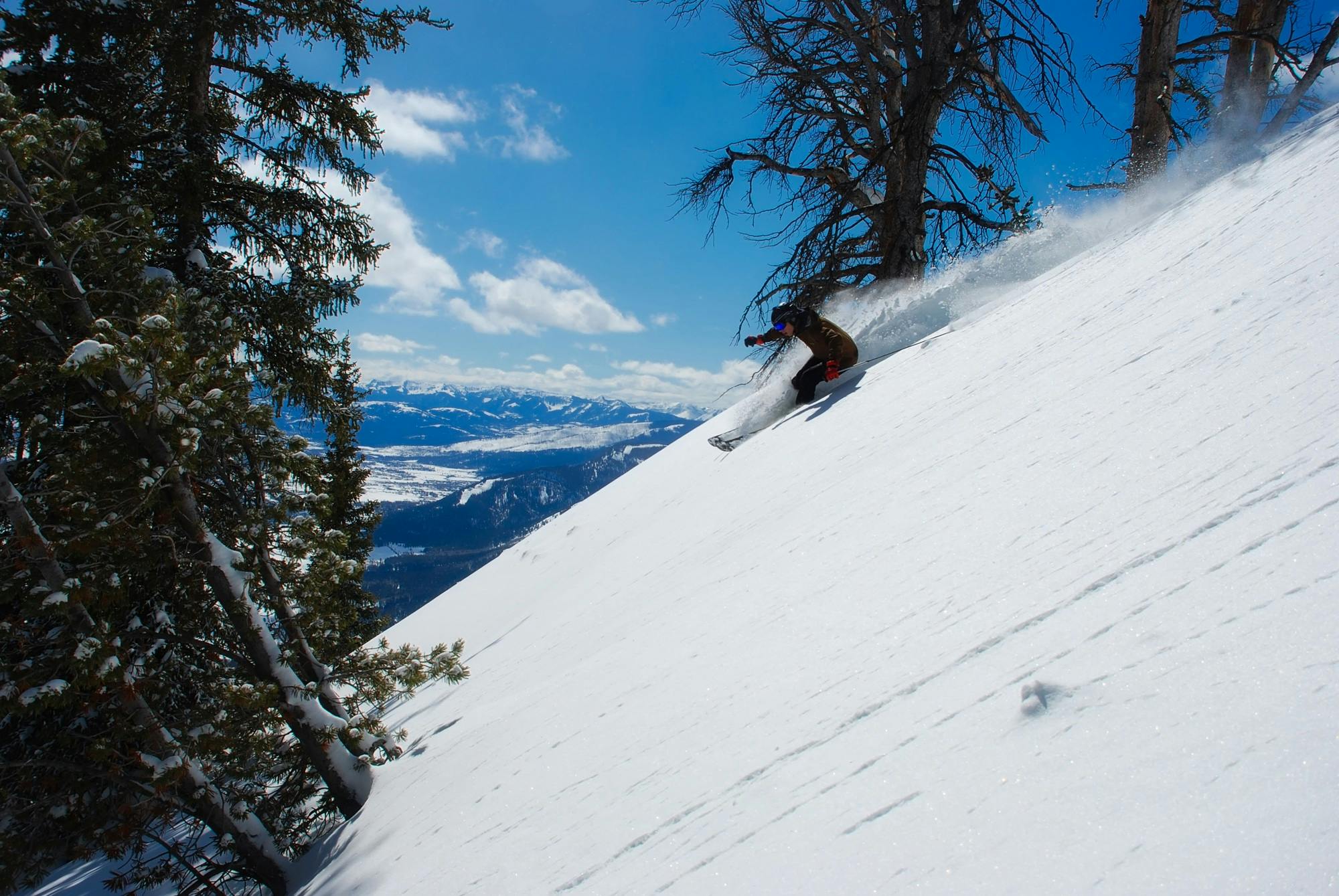
Locals weren’t chasing perfect turns on groomed runs. They were learning how to move through steep, variable terrain. They hiked ridgelines just to see what lay beyond the next peak, learning it all in real time without a blueprint to follow.
Before backcountry and sidecountry became a category, it was just what you did if you wanted more. The boundary lines weren’t limits– they were starting points.

The Tetons as a Testing Ground
The Teton Range has a way of sharpening people. Weather rolls in fast. Snowpacks can be complex. Lines are committing and often unforgiving.
That combination turned Jackson into a proving ground for big mountain riding. Not because it was designed that way, but because the environment left no other option.
By the 80s and 90s, Jackson Hole had built a reputation that extended far beyond Wyoming. Big mountain riding was evolving, and Jackson was at the center of it. Film crews, pro athletes, and locals all feed into the same culture. Progression wasn’t a trend here. It was a byproduct of the terrain.
Doug Coombs carved out lines on first descents that no one else would dare touch, showing that the Tetons rewarded those willing to push themselves to the edge. Erik Roner brought a mix of extreme skiing and BASE jumping, blending risk and creativity in a way that became emblematic of Jackson’s ethos. And as cameras rolled, Teton Gravity Research didn’t just film the stunts; they captured the raw energy, audacity, and community of Jackson Hole, broadcasting the mountain’s unique culture and extreme skiing and snowboarding to the world.

The Rise of Backcountry Culture
As gear improved and knowledge spread, backcountry riding in Jackson didn’t just grow. It matured.
What started as exploration became more intentional. Avalanche education, route planning, and technical systems became part of the culture. The bar kept rising, but so did the awareness of what it takes to move safely in these mountains.
At the same time, the aesthetic of backcountry riding began to take shape. Clean lines, human-powered access, and a deeper connection to the landscape. It wasn’t just about riding something steep. It was about how you got there and why.
That philosophy is a big part of what separates Jackson from other destinations. The culture isn’t built on access alone. It’s built on effort.

Enter Nori Suzuki
When Nori Suzuki first came to the Tetons, he wasn’t just visiting another ski destination. He was stepping into a completely different relationship with the mountains.
Coming from Japan, where the mountains move to a different tempo, Jackson felt like stepping into a completely different rhythm. A wild mix of cowboys, ski bums, and adrenaline junkies, all drawn to the same rugged skyline.
At first, Nori had no real sense of where to go or how to move through the terrain, but that quickly shifted with the people he met. Local skiers, guides, and riders took the time to show him around and bring him into the fold. Little by little, he learned the landscape alongside a crew that seemed set on exploring every inch of it.
That’s the core of Jackson. Progression here isn’t just about riding. It’s about the process of learning a place through experience and through community.

Influence on Teton Bros
The DNA of Teton Bros is tied directly to that time in Jackson. Not in a surface-level way, but in how the brand approaches design and purpose.
Instead of building gear around trends, the focus became function-driven by real experience. Lightweight systems for movement. Breathability for long days. Durability where it actually matters.
Jackson's influence shows in the details. Gear meant for touring, not just resort laps. Pieces that perform in variable conditions, not just ideal ones.
There’s also a deeper layer. A respect for the mountain environment and the people who spend time in it. That balance between pushing limits and understanding them is at the heart of Teton Bros.
Jackson Hole didn’t become an epicenter by accident. It was shaped by terrain, risk, and a community that leaned into both. That same environment left a lasting mark on Nori Suzuki, and through him, on Teton Bros.
It’s a reminder that the best ideas in mountain culture don’t come from boardrooms. They come from experience. From time spent in places that push you to figure it out for yourself.